Performance
How can athletes benefit from an indoor bike that tilts?
A conversation with Emily Chong on biomechanics, cycling specificity and what changes for a rider when the bike is free to lean and steer.
This interview dates from MUOV's development as Muoverti, when the bike was known as the TiltBike. Roles and titles are as they stood at the time of writing.
We asked our in-house expert and Product Management Lead, Emily Chong.

Product Management Lead (at the time of writing)
Emily's first degree was in Physics, followed by a Masters in Applied Biomechanics. Pairing this knowledge and expertise with a lifelong passion for endurance triathlon and cycling makes Emily a great asset to the Muoverti team. Having been a triathlon coach for many years, Emily is also part of the sports injury rehabilitation team at a leading physio clinic and as such has good insight into the benefits of riding an indoor bike that tilts for training and recovery.
What's unique about the TiltBike from a biomechanical perspective?
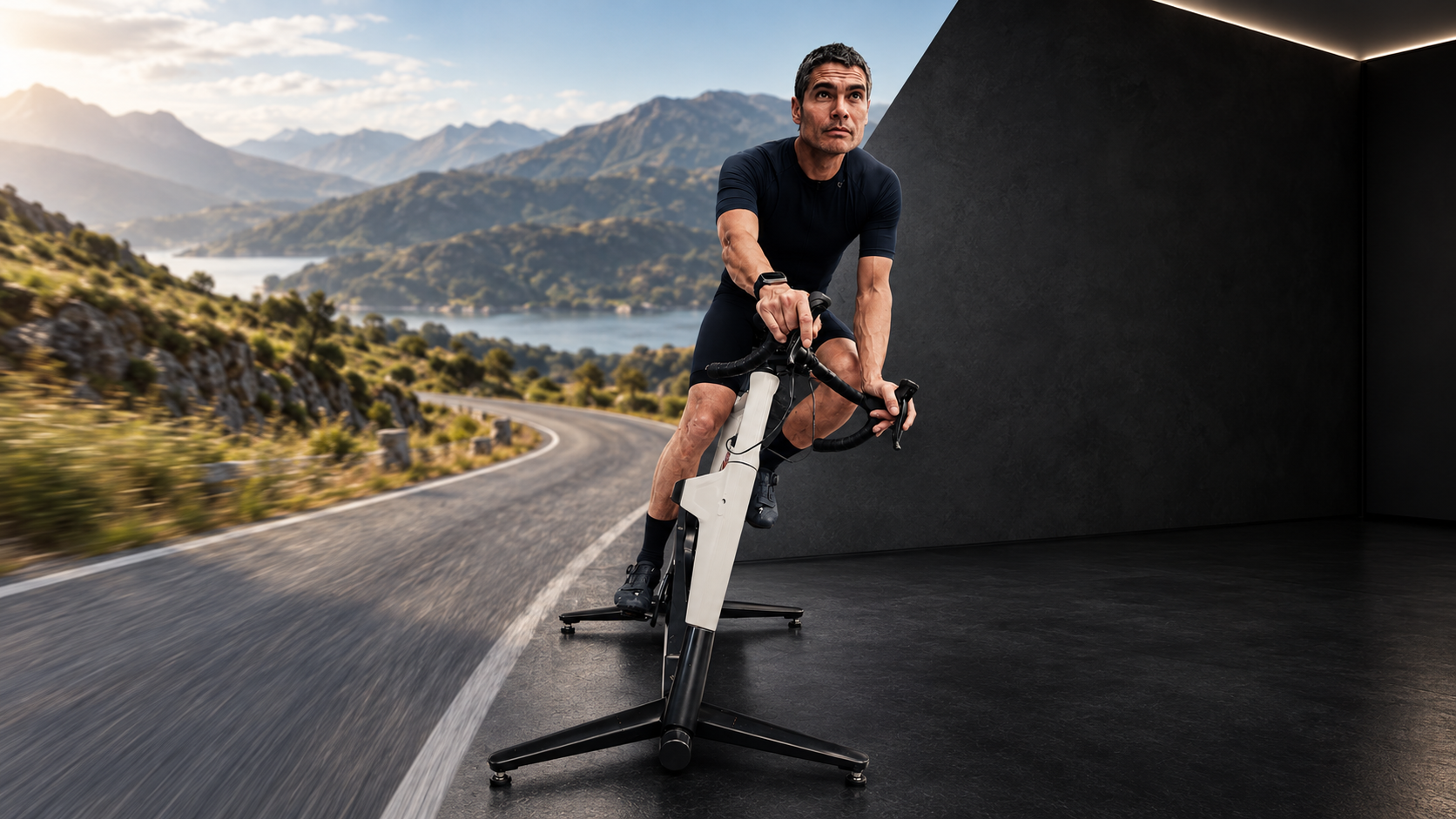
On a TiltBike, the rider is able to lean side to side and steer the bike, which is biomechanically much closer to riding outdoors compared to the static indoor bike setups that are currently available. Balancing a TiltBike is a dynamic physical effort that requires coordination between both the body and the bike.
What training benefits does this offer?
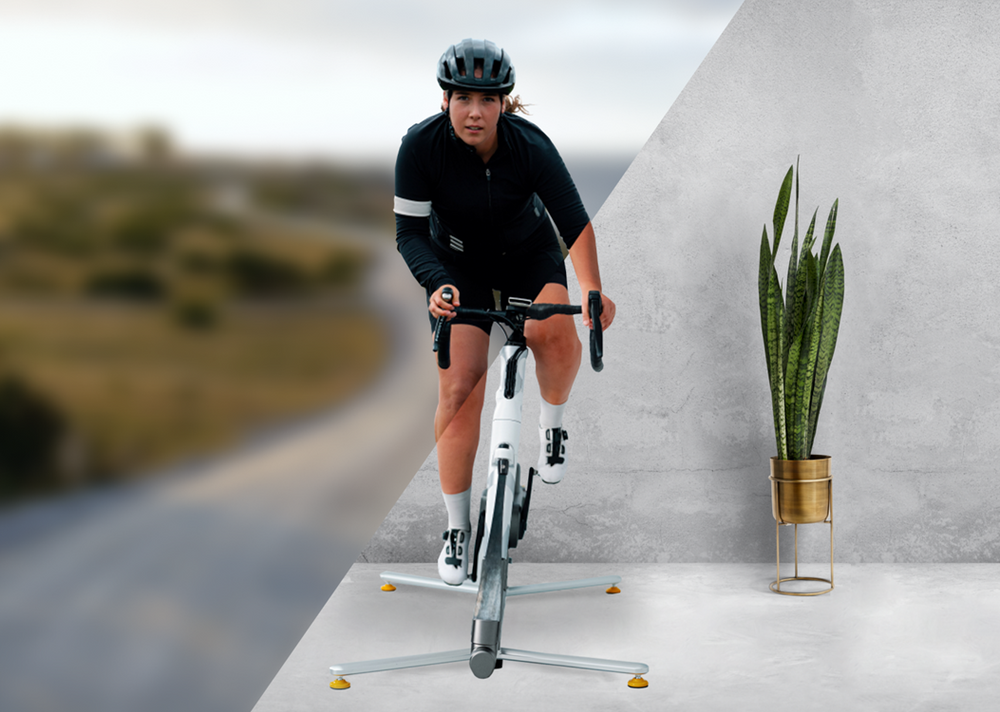
The lateral movement and balancing on a TiltBike, controlled by leaning your body, and the ability to lean the bike when out of the saddle, means that the rider has to recruit other muscle groups, engaging the core and utilising upper body strength and leverage, just as they would riding a bicycle outside. The more that indoor riding can replicate riding outdoors, the greater the training benefit from a cycling specificity perspective.
An analogy could be using weight machines in a gym. They're perfect for exercising a specific group of muscles at a time in one plane of movement, which is great for rehabilitation as it addresses imbalances by simplifying a movement. They're also an ideal starting point at the beginning of any strength-building program as that limited range of movement can help with injury prevention in the case of poor control technique.
However, the next stage of any strength training journey would be using free weights, bars, etc. so that you can activate your core and begin to introduce a balance element that involves more complex movement, recruiting more muscle groups in the same movement compared to the static training provided by a machine.
What else is unique about TiltBikes from a training perspective?
In any sport, the three elements that contribute to fitness are strength, cardiovascular capacity, and skill. The fundamentals of improving strength and cardio are to progressively increase training volume so that muscles and the cardiovascular system adapt to delay fatigue.
With TiltBikes you can now train these elements together, which can then be transferred into a real-world environment.
Practising cycling skills such as balancing, cornering, stand-up efforts, getting a drink bottle out while riding etc. cannot be achieved by training on a static indoor bike, where the only movement that apparatus permits is your legs moving up and down to rotate the cranks.
What about injury prevention?
One of the most common 'injuries' that cyclists of all levels of ability experience is saddle soreness. A good bike fit, plus using a saddle and bib short pairing which works for that particular rider, can resolve this for riding outdoors because the bike is able to move with the rider.
When riding a static turbo trainer or indoor bike, where the bike is fixed into position and doesn't accommodate the movement of the rider, localised pressure on the saddle is likely increased. As mentioned before, fitness progress relies on gradually increasing volume in training, but if you're uncomfortable from riding after only a short period of time, you're unlikely to be able to ramp up your training!
Continue reading