Buying guide
How to Choose an Indoor Cycling Bike: The Complete Buyer's Guide
Not all indoor bikes are created equal. From basic exercise bikes to advanced smart cycling systems, here's what to consider before investing in your next indoor riding experience.
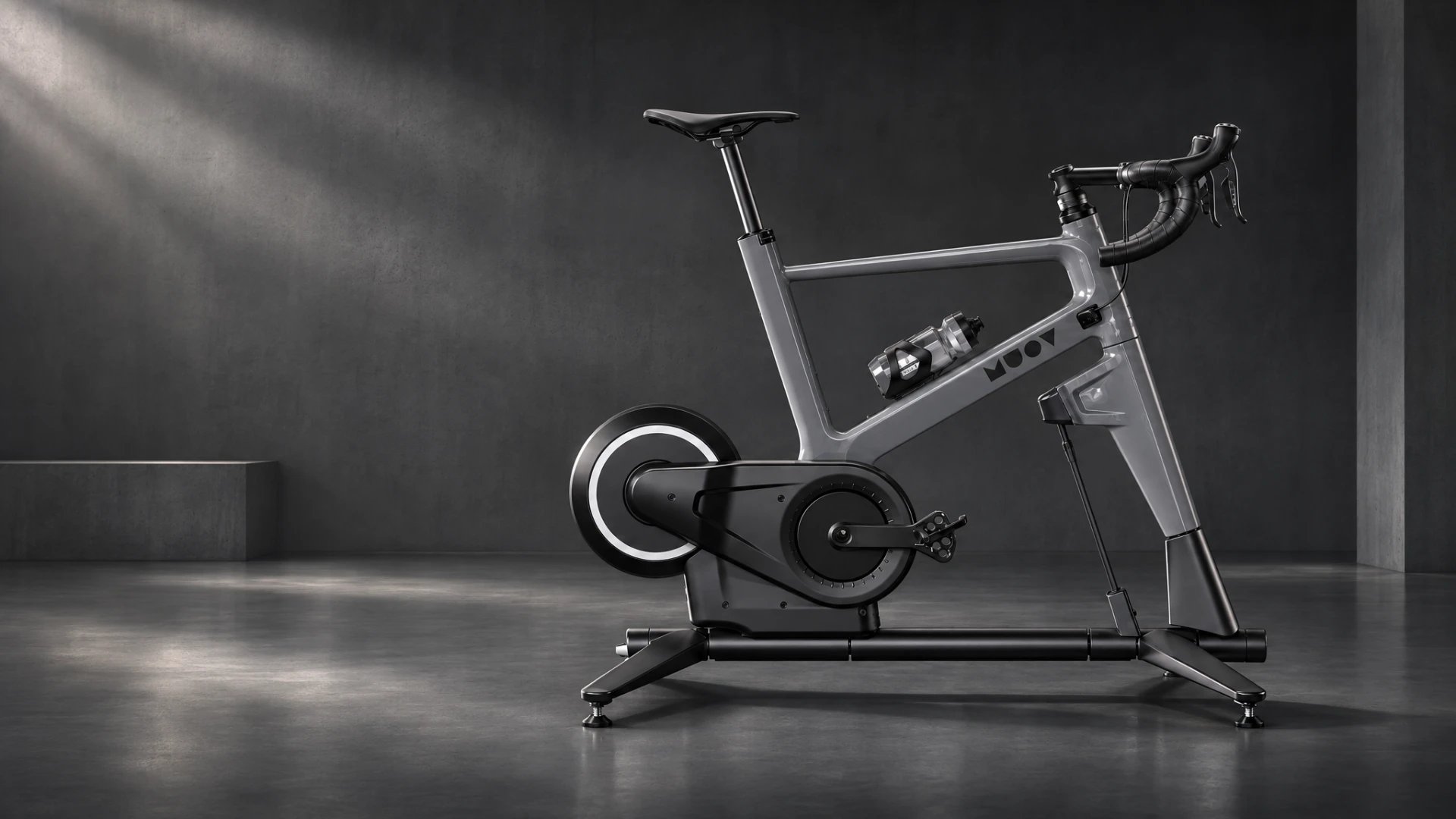
Indoor cycling has evolved.
What was once largely a choice between a traditional exercise bike and a turbo trainer has become an increasingly sophisticated category of connected training equipment.
Today's indoor bikes can measure power, simulate gradients, connect to virtual cycling worlds and reproduce elements of the outdoor riding experience. Some even allow the rider to lean and steer.
But with so many different technologies, specifications and price points, how do you know which bike is right for you?
Whether you're an experienced road cyclist, a competitive athlete or someone looking to bring a more engaging form of exercise into your home, choosing the right indoor bike starts with understanding what matters most.
1. Understand the different types of indoor cycling bikes
Before comparing brands and specifications, it helps to understand the main categories.
Traditional exercise bikes
Designed primarily for general fitness, traditional exercise bikes offer a convenient, accessible way to cycle indoors.
They're typically simple to use, require relatively little setup and are available across a wide range of prices.
Best suited to: General fitness, casual cycling and people looking for straightforward cardiovascular exercise.
Spin bikes
Spin bikes, sometimes called indoor studio bikes, are designed around a more athletic riding position and the experience of instructor-led cycling classes.
They typically use a weighted flywheel with adjustable resistance and allow riders to alternate between seated efforts and out-of-saddle riding.
Best suited to: Studio-style workouts, interval training and riders who enjoy structured classes.
Smart indoor cycling bikes
Smart bikes combine a dedicated indoor cycling frame with electronically controlled resistance, power measurement and connectivity to compatible training software.
Depending on the model, they may offer virtual gear shifting, automatic resistance changes, gradient simulation and integration with platforms such as Zwift, ROUVY or TrainerRoad.
They are designed to make indoor cycling more measurable, interactive and, in some cases, more realistic.
Best suited to: Road cyclists, performance-focused riders, structured training and immersive virtual cycling.
Smart turbo trainers
A smart trainer is an alternative to buying a dedicated indoor bike.
It allows you to connect your existing bicycle to a resistance unit that communicates with training platforms.
This can be an excellent option for cyclists who want to train on their own bike, although it requires space for the full setup and may involve regularly mounting and removing the bicycle.
Best suited to: Cyclists who prefer to use their existing bike and want a potentially lower-cost route into connected indoor training.
2. Riding realism: does the bike feel like cycling?
One of the biggest differences between indoor bikes is how they respond to the rider.
Traditional stationary bikes remain fixed in position. Even when resistance changes to simulate climbing or descending, the bike itself generally stays still.
Outdoor cycling is different.
A bicycle moves beneath the rider. Balancing, steering, changing direction and responding to changes in terrain are all part of the experience.
This distinction becomes particularly relevant for cyclists who want their indoor training to feel connected to their outdoor riding.
When evaluating an indoor bike, consider:
- Does it respond naturally when you accelerate or change cadence?
- Can you change gears as you would on a road bike?
- Does the bike provide any lateral movement?
- Can you steer in compatible virtual environments?
- Does it support realistic riding positions and out-of-saddle efforts?
A different approach: movement, not just resistance
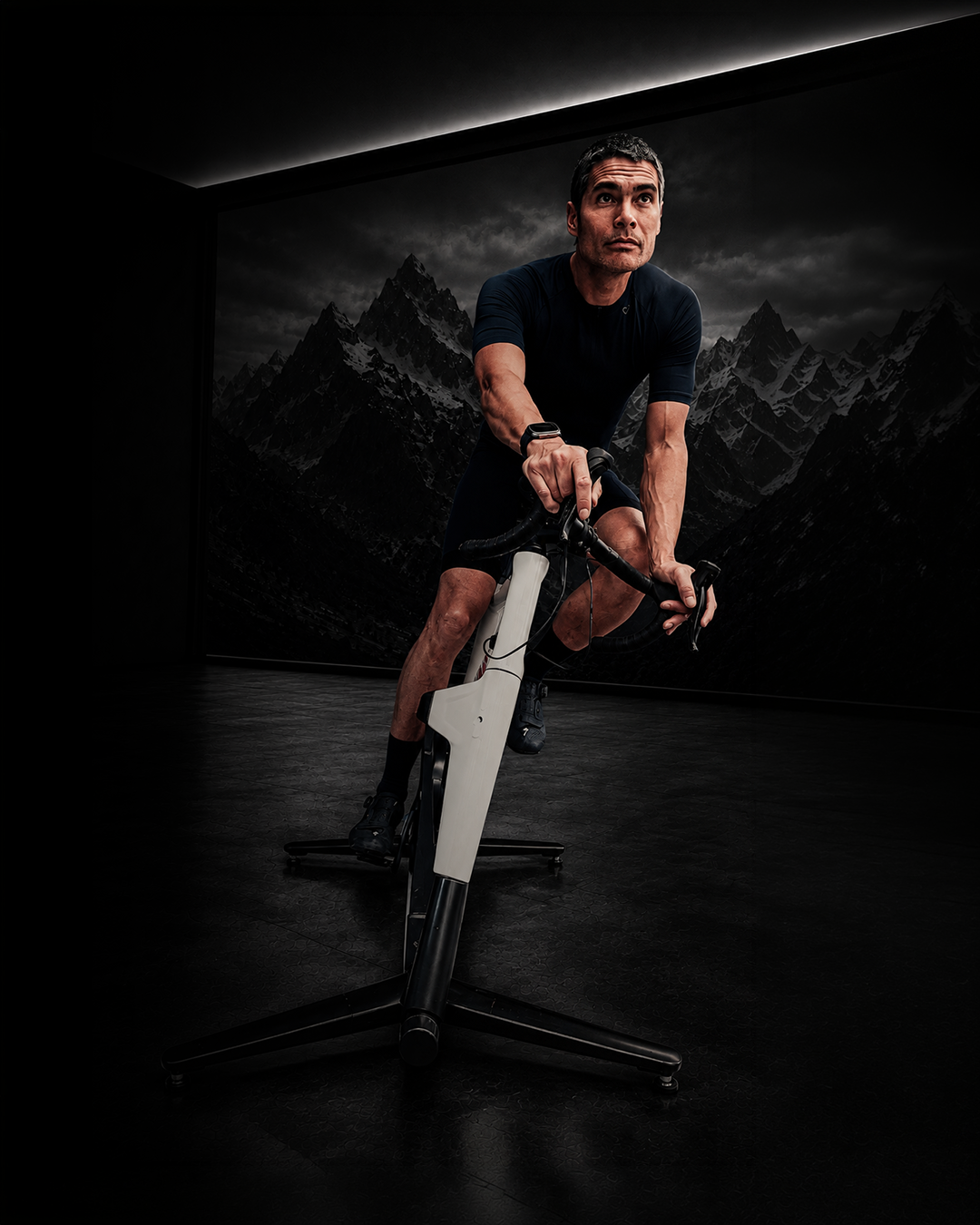
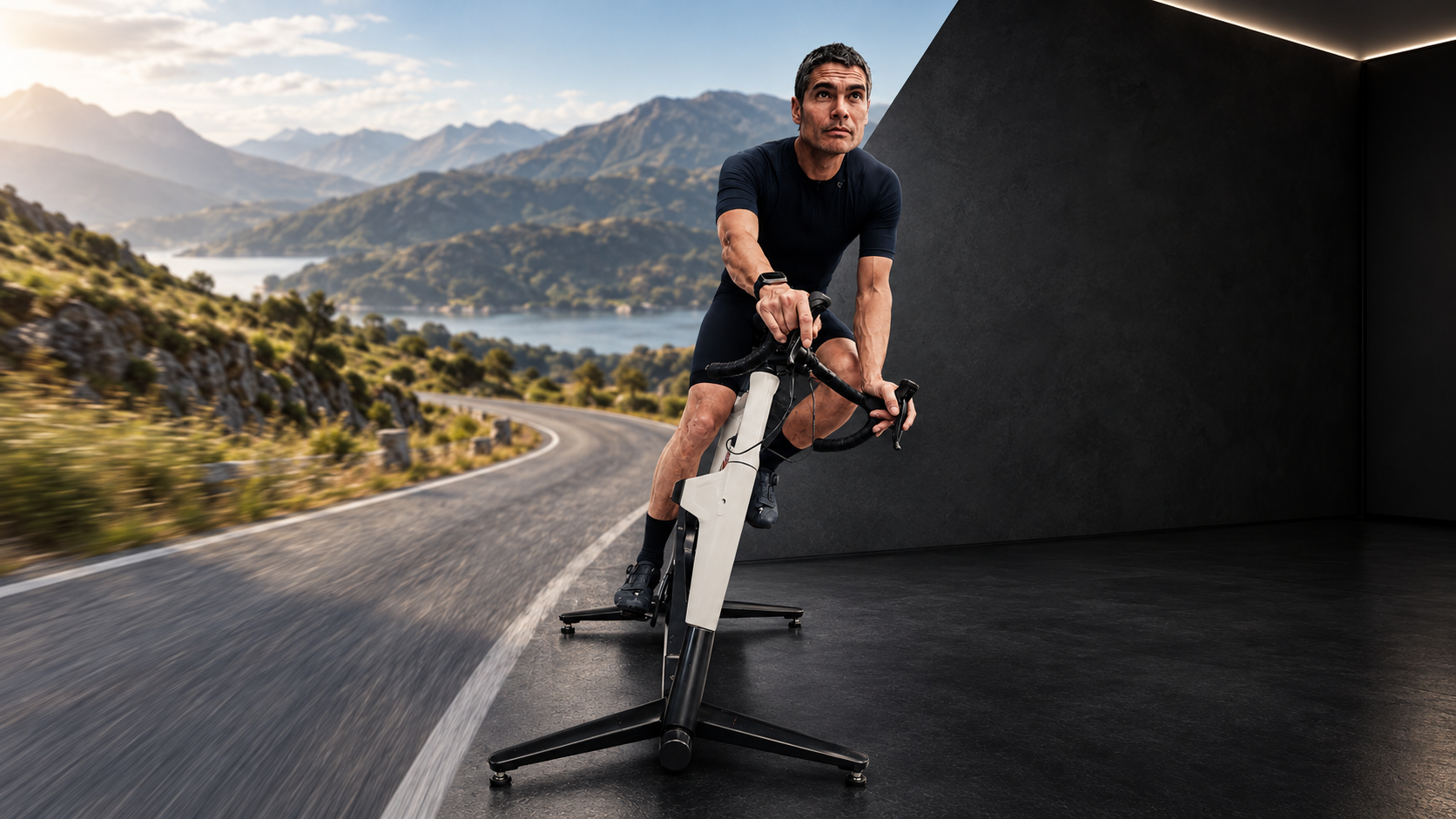
MUOV was engineered around the idea that indoor cycling should involve more than turning the pedals against resistance.
Its patented movement platform allows the bike to lean by up to 12 degrees, with handlebar steering integrated into supported virtual cycling environments.
Combined with electronic shifting and braking controls, this creates a more dynamic relationship between rider and machine.
Rather than simply replicating the effort of cycling, MUOV aims to reproduce more of the interaction that makes riding a bicycle feel natural.
For riders who value immersion and road feel, movement deserves a place alongside power and resistance on the buying checklist.
3. Power accuracy: understand what you're measuring
For riders following a structured training programme, power measurement is one of the most important specifications.
Power, measured in watts, provides an objective indication of cycling output.
It is commonly used for threshold testing, interval sessions, pacing and monitoring training progression.
But not all indoor bikes measure power to the same stated level of accuracy.
When comparing systems, look for:
- Published power accuracy figures.
- Consistent measurement across different efforts and cadences.
- Responsive changes in resistance.
- Compatibility with power-based training applications.
- A dedicated ERG mode for structured workouts.
What is ERG mode?
ERG mode allows compatible training software to specify a target power output.
The bike then adjusts resistance to help maintain that target as your cadence changes, within the system's operating limits.
For structured sessions, this can allow riders to concentrate on completing their workout rather than constantly changing gears or resistance.
How MUOV approaches power measurement
MUOV specifies power accuracy of ±0.5%, a 30 Hz data refresh rate and maximum power of 2,500 watts.
It also supports ERG mode and simulated gradients of up to 25%.
These specifications are designed to support structured training alongside the bike's movement-based riding experience.
For serious cyclists, it's worth evaluating both the quality of the power data and how naturally the bike delivers the resistance behind it.
4. Bike fit: one of the most important buying decisions
An indoor bike can have impressive technology, but if it doesn't fit you properly, that technology may be of limited value.
Your riding position influences comfort and how closely your indoor setup reflects your preferred outdoor position.
Important considerations include saddle height and position, reach to the handlebars, crank length and handlebar width.
A premium indoor bike should offer enough configuration to suit the people who will actually use it.
What to check before buying
- Rider height range: Does the manufacturer clearly specify the range of riders the bike accommodates?
- Crank length: Can you select a crank length appropriate to your measurements and riding position?
- Handlebar position: Can the cockpit be configured to suit your reach and preferred riding style?
- Saddle and pedals: Can you use components that feel familiar?
- Multiple riders: Can more than one person use the same bike without a lengthy adjustment process?
The MUOV approach to fit
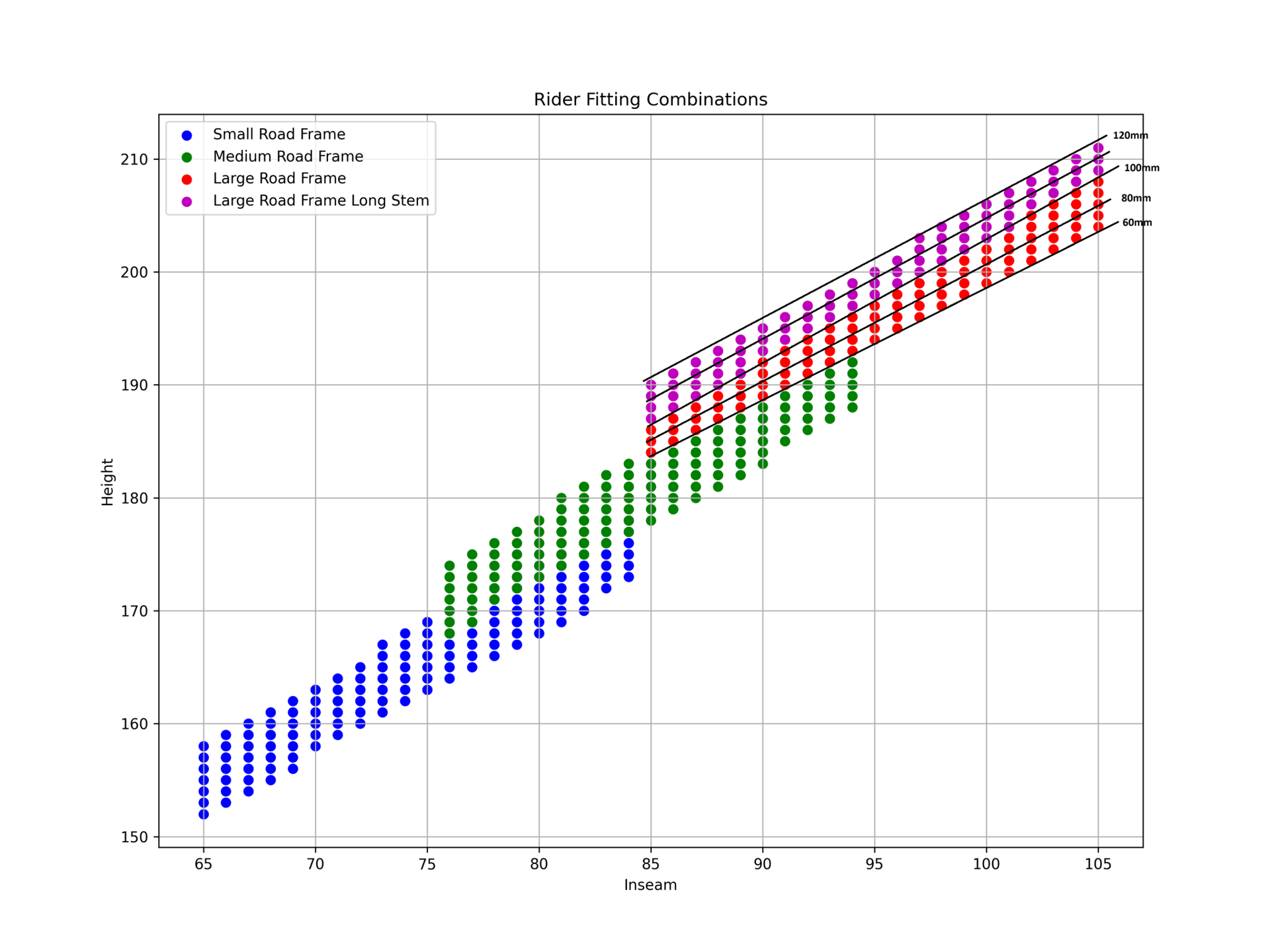
MUOV offers three frame sizes covering riders approximately 152–200 cm tall, seven crank-length options between 150 mm and 175 mm, and a configurable cockpit.
The system also supports interchangeable saddles and pedals.
For households with more than one cyclist, MUOV's modular design allows a second, separately configured frameset to be exchanged in under 30 seconds.
This enables two riders to maintain distinct setups while sharing the same base.
The lesson: Don't choose a bike on technology alone. Choose one that can be configured around the rider.
5. Connectivity: will the bike work with your favourite training apps?
Connected cycling has changed what indoor training can be.
Virtual environments, structured workouts and online racing can turn a solitary session into a more interactive experience.
But app compatibility varies across machines.
Before buying, consider whether your preferred platform is supported and which functions are available within it.
Popular platforms include Zwift, ROUVY, MyWhoosh, TrainerRoad and TrainingPeaks Virtual.
Some provide immersive virtual worlds and competitive riding. Others place greater emphasis on structured workouts and performance data.
Look beyond basic connectivity
A bike connecting to an app does not necessarily mean every feature will work.
Ask whether the platform supports:
- Automatic resistance control.
- Power and cadence data.
- Electronic or virtual shifting.
- Steering.
- Braking and other interactive controls.
Features such as steering and braking depend on the capabilities of the individual training platform.
Platform freedom with MUOV
MUOV connects through Bluetooth BLE FTMS and Wi-Fi and supports multiple third-party training environments.
These include Zwift, TrainingPeaks Virtual, MyWhoosh, ROUVY, TrainerRoad and Biketerra.
MUOV also provides its own app for setup, shifting configuration and software updates.
There is no mandatory MUOV content subscription, although subscriptions to third-party platforms may apply.
For anyone investing in a premium indoor bike, flexibility matters. Your training preferences may change, and your equipment should give you room to explore.
6. Resistance, shifting and the feeling of the road
Maximum resistance is often one of the headline specifications in smart-bike comparisons.
It's useful, but the highest wattage figure doesn't automatically translate into the best riding experience.
The responsiveness of the resistance system matters too.
Consider how the bike behaves when moving from easy pedalling to hard acceleration, when changing cadence or when following the changes of gradient in a virtual course.
It's also worth evaluating the controls.
Can you shift naturally without interrupting your riding position? Are the controls intuitive? Can you customise how the bike responds?
MUOV uses a low-inertia belt-drive system with electronically controlled resistance and configurable SRAM- or Shimano-style shifting.
Its system is designed to bring together responsive resistance, familiar road-bike controls and physical movement.
These details can become especially important during longer sessions, repeated training efforts and virtual racing.
7. Practical considerations: space, noise and everyday usability
Performance is only part of the decision.
An indoor bike also needs to fit into your home and routine.
Before purchasing, consider where it will live, how frequently it will be used and whether you need to move or store it between sessions.
Space and stability
Check the manufacturer's stated footprint, but allow additional room for mounting and dismounting, handlebar movement, ventilation and access around the bike.
For a moving bike, clearance around the machine is particularly important.
Noise
Consider drivetrain noise, resistance-system noise and vibration transmitted through the floor.
A belt-driven bike may avoid some mechanical noise associated with a conventional chain drivetrain, but actual noise will vary according to the machine, riding intensity and environment.
Displays and accessories
Not every smart bike includes a screen.
A bike designed to work with external platforms may allow you to choose your preferred display, whether that's a tablet, computer or larger screen.
Check what is included and what you need to supply separately.
Maintenance and support
Understand the warranty, software update policy, servicing arrangements and availability of customer support.
Indoor cycling equipment is a long-term purchase. The ownership experience deserves as much consideration as the first ride.
8. Price versus value: what are you really paying for?
Indoor cycling bikes range from relatively inexpensive fitness equipment to premium machines costing several thousand pounds.
The right choice depends on the experience you want.
If your priority is straightforward cardio exercise, a basic exercise bike may be entirely sufficient.
If you enjoy instructor-led workouts, a studio-style bike may provide everything you need.
But for cyclists seeking performance data, connected training, realistic bike fit and immersive riding, a dedicated smart bike can justify a more significant investment.
At the premium end of the market, the question becomes less about the price of the machine and more about the quality of the experience it delivers over time.
MUOV Road Bike is priced at £4,995 in the UK.
It combines power measurement, electronic shifting, virtual-platform connectivity, rider-specific fitting and a patented system that allows the bike to lean and steer.
It's designed for riders who want indoor training to feel like more than a stationary workout.
9. Your indoor cycling bike buying checklist
Before making a final decision, ask yourself these ten questions:
- Purpose: Am I buying for general fitness, structured training, competitive cycling or immersive riding?
- Ride feel: Do I want a fixed bike, or does natural movement matter to me?
- Accuracy: How important is reliable power measurement?
- Fit: Can the bike be configured around my body measurements?
- Training: Does it support ERG mode and the workouts I want to complete?
- Connectivity: Will it work with my preferred cycling applications?
- Controls: Does it offer the shifting and interactive functions I want?
- Household use: Can different riders share the equipment comfortably?
- Ownership: Am I satisfied with the warranty, support and software arrangements?
- Experience: Most importantly, will I enjoy riding it regularly?
The best indoor cycling bike isn't necessarily the one with the longest specification sheet.
It's the one that delivers the experience you'll want to return to.
10. Why trying a bike matters
You can compare accuracy, wattage, dimensions and connectivity online.
But some aspects of cycling are difficult to evaluate from specifications alone.
How a bike feels beneath you, how naturally it responds to your movements and how confidently you interact with the controls are best understood by riding it.
That's particularly true when considering a system with physical movement.
MUOV offers test-ride opportunities through selected showrooms and cycling partners across Europe, allowing prospective customers to experience its lean-and-steer technology before purchasing.
If you're investing in a premium indoor cycling setup, experiencing the bike firsthand is one of the most valuable steps you can take.
The future of indoor cycling is about more than power
Indoor cycling has advanced far beyond the static exercise bike.
Today's systems can combine sophisticated performance measurement, virtual environments, electronic controls and increasingly realistic riding experiences.
The most important step is deciding which of those capabilities will genuinely improve your training and enjoyment.
For some, simplicity will always win.
For others, accuracy and structured workouts will be the priority.
And for riders who want to recreate more of the sensation of cycling outdoors, the ability of the bike to move beneath them opens up a different experience.
At MUOV, we believe indoor cycling should not feel static.
Because the best indoor ride should make you want to ride again.
Experience MUOV for yourself
Explore the engineering, experience the movement and discover a new perspective on indoor cycling.
Continue reading